
Make pricing and comparison less of a guess
Sections people can follow
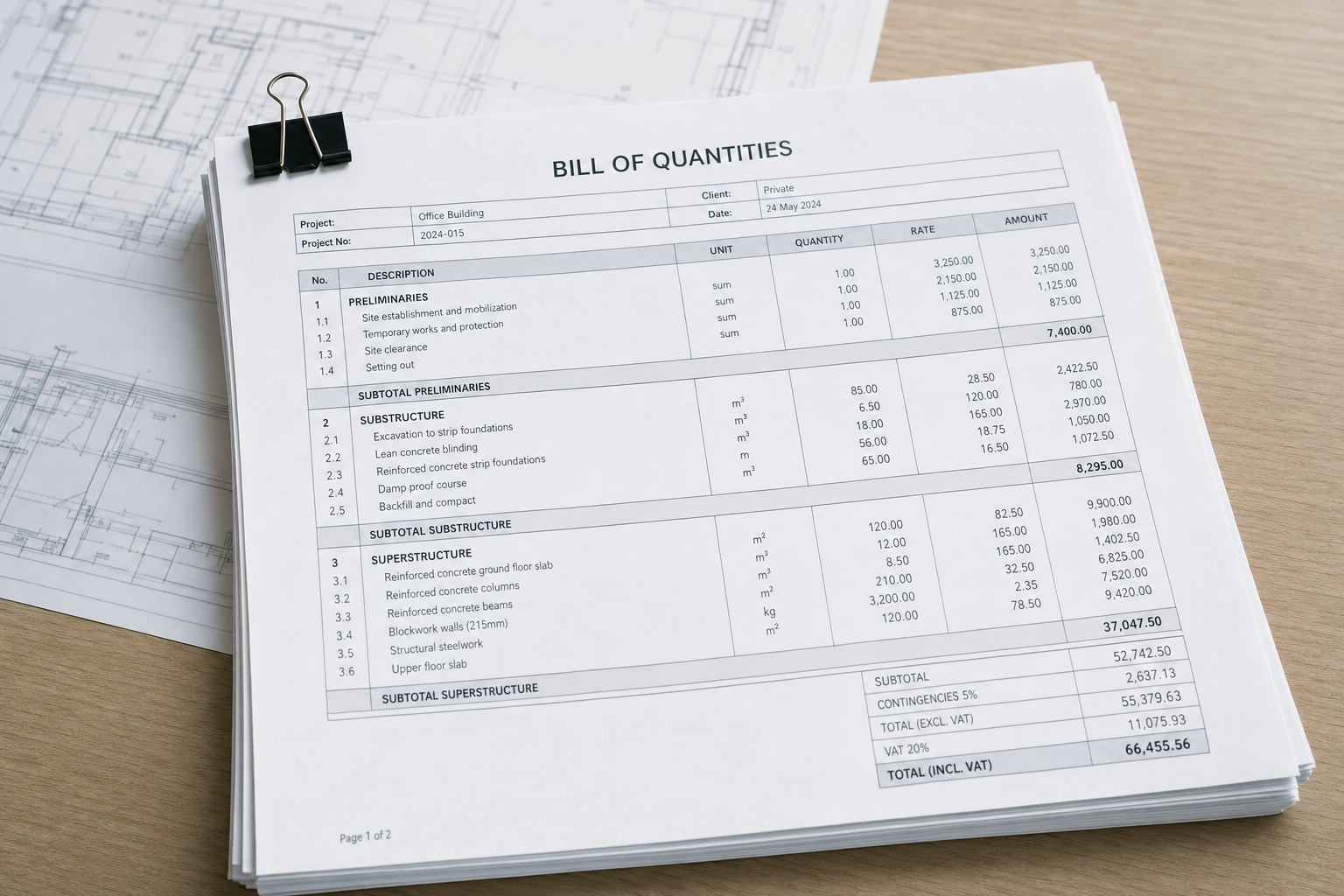
Trade sections, units and descriptions make pricing easier to follow.
Quotes easier to compare
Comparable bills help stop suppliers and contractors pricing different jobs.
Bills linked to live data
Keep quantity, scope and pricing information tied together more neatly.
Structured bills that people can actually use
A bill of quantities is useful when it makes the job easier to price, compare and buy, not when it buries everyone in vague line items. We use drawing-derived quantities to organise work into a clearer structure, with sections, descriptions, units and amounts that contractors, estimators and suppliers can follow. With Suddeco Limited, you move from raw measurement to a document that helps people price the same thing rather than making their own assumptions. That saves a lot of messy back and forth later.

A clearer base for tender and procurement work
A structured bill also gives procurement and tender discussions something solid to work from. When the scope is clearly defined, it becomes easier to compare quotations, plan supplier enquiries and see where the cost sits across the project. Choosing Suddeco Limited means the bill can stay linked to automated quantities, detailed scopes and live material and labour pricing, so the information is connected instead of copied from place to place.
Frequently asked questions
How is a bill of quantities usually structured?
A useful bill is usually grouped into trade or work sections, with clear descriptions, units and quantities that people can price consistently. The aim is to make pricing easier to understand and compare, not to produce a long list that nobody reads properly.
Why does the project scope matter so much?
If the scope is vague, the bill can only be vague in a more organised format. Clear scope information helps ensure the quantities, work descriptions and pricing discussions are all referring to the same job, which makes tenders and procurement planning far more reliable.
Can this help compare contractor or supplier prices?
Yes. A structured bill gives contractors and suppliers a clearer basis for pricing the same work, which helps expose differences in rates, allowances or assumptions. That is usually far more useful than comparing quotations built from completely different interpretations.